Optimizely


November 07, 2025
Leslie Weller
|
Managing AI search across dozens, hundreds or even thousands of websites can be one of the most complex challenges facing digital experience teams today. Each site has its own content, audiences and goals, but visitors expect consistent, contextual results every time they use the search bar.
With Multi-site search management, organizations can now oversee and optimize all their onsite search experiences from one platform. This new capability within SearchStax Site Search gives marketing and digital teams full control and visibility across every brand and website experience they support.
What Is Multi-Site Search Management?
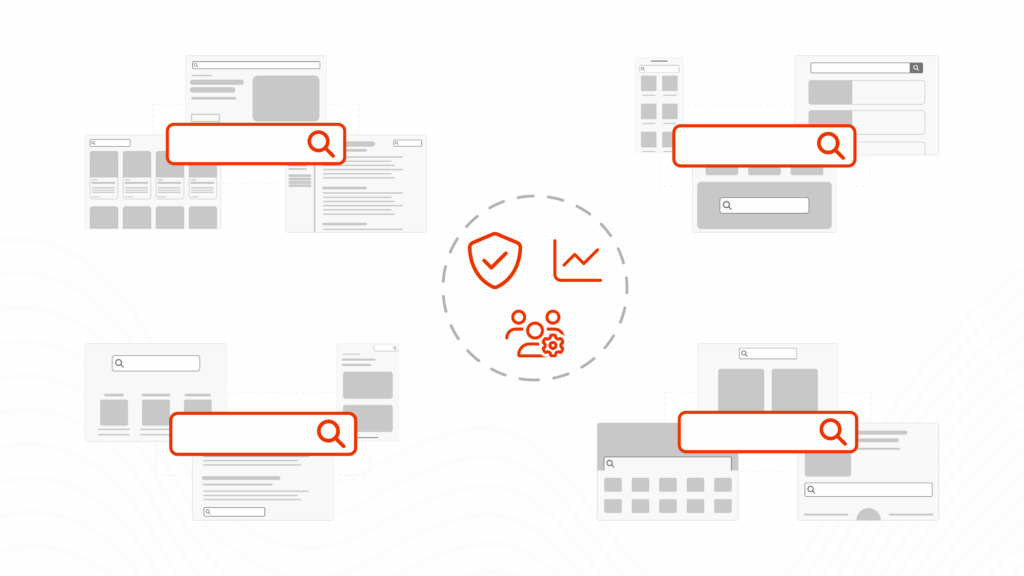
Multi-site search management makes it possible to create, govern and optimize onsite search experiences across multiple websites without duplicating infrastructure or compromising security.
It centralizes control while allowing each team or region to customize the details of their own search. This balance between oversight and autonomy helps organizations deliver AI innovations and gain marketing agility while maintaining brand consistency and protecting data.
Two major building blocks enable this flexibility:
- Apps: Unified search indexes that maintain separate permissions and data sources for distinct brands and environments.
- Search Profiles: Independent configurations within an app that represent unique search experiences, such as a program finder, global search or location search.
Together, they allow web teams to manage and optimize information-rich search experiences from a single platform.
The Growing Challenge of Managing Search Across Websites
For many organizations, managing multiple sites has meant laborious search setups, or worse, no search at all on secondary sites, which frustrates visitors and provides little to no insights. This fragmented approach creates friction for visitors who can’t find what they need and creates inefficiencies, which make it difficult to ensure consistent quality.
Multi-site search management simplifies this by providing one framework for AI innovations, analytics and governance while unlocking the search bar as an untapped marketing channel. The result is a unified, secure and scalable way to handle search across the entire digital ecosystem.
Bringing Marketing Agility to Digital Teams
When marketers can make configuration changes without waiting for developers, they can adapt faster to audience needs. Multi-site search management allows teams to update search fields, promotions, filters and other key settings independently for each website.
A marketing team managing global, regional and campaign-specific sites can now optimize each search experience in minutes rather than days. What could potentially take dozens of hours of developer time to update and optimize multiple site search experiences, now lies in the hands of the digital experience owners without IT intervention. That speed leads to more relevant results for visitors and better insights for the organization.
Key Benefits of Multi-Site Search Management
1. Enhanced security and governance
Assign team-based access to ensure the right people manage the right data. This structure supports regulatory compliance and data privacy across global and multi-brand websites.
2. Actionable search insights
Gain visibility into user behavior at both the individual site and global level. Teams can identify emerging trends and measure engagement across different types of search experiences.
3. Improved efficiency and autonomy
Centralized management reduces duplication of effort and streamlines updates. Teams can adjust promotions, filters and search result layouts for each site without technical support.
Who Benefits Most from Multi-Site Search Management?
Multi-site search management is ideal for organizations with complex web ecosystems, such as:
- Healthcare systems operating multi-regional, provider and location-specific searches for their complex collection of facilities and services.
- Multi-national global brands with regional web and marketing teams responsible for distinct sets of websites
- Universities managing separate program, event and news searches across multiple domains that often include separate colleges within their institution.
- Government agencies with multi-department or regional websites that cover everything from state and federal level information, down to content that’s specific to municipalities.
These organizations share a need for centralized oversight, consistent quality and distributed control. Multi-site search management delivers all three. The benefits aren’t just limited to these industries; any organization that has an information-rich website and manages multiple site instances will gain both marketing and operational agility from centralized control of their unique search experiences.
Solve Site Search Challenges at Scale
How can we manage different teams and permissions securely?
Search app permissions give each team access only to the data and tools they need, maintaining both governance and autonomy.
How can we understand performance across multiple search experiences?
Search Profile analytics show how visitors engage with each search experience and how that data rolls up into enterprise-wide trends.
How do we optimize the search experience within our complex digital ecosystem?
SearchStax Site Search with multi-site search management capabilities delivers simple tools to make updates at once across many search bars, or apply changes independently to enhance specific areas of the site.
Why Organizations Need Multi-Site Search Management Today
Digital ecosystems continue to expand as organizations add regional sites, microsites and brands. Managing search at this scale has become too complex for disconnected systems and riddled with risk and manual oversight.
Multi-site search management gives web and marketing teams a structured and data-driven way to unify control across every search experience. For enterprises and institutions alike, it turns onsite search into an insight-rich, marketing-driven channel that supports every brand and audience with AI-powered innovation.