 Optimizely


Search doesn’t fail quietly. When Apache Solr supports production search, every delay, outage, failed recovery, patch cycle and cloud capacity issue creates business impact. At that point, “do it yourself” (DIY) Solr changes from an engineering choice into a financial decision.
Apache Solr is built for enterprise search. It gives customers the control, relevance depth and flexibility needed for complex search applications, including AI retrieval. The financial risk starts when internal teams own the operational burden alone.
Why Does DIY Solr Cost More After Deployment?
After deployment, the cost shifts from software to operations.
That’s where “DIY” gets expensive. Once Solr supports production search, the customer’s burden expands exponentially across uptime, patching, monitoring, backups, version upgrades, security reviews, cloud capacity and recovery. None of that work disappears because Apache Solr is open source. It lands on engineering, platform, DevOps or IT teams that already own product improvements, uptime commitments, performance targets and KPIs.
Operational drag is the hidden cost. DIY Solr pulls skilled people away from roadmap work and puts them on infrastructure duty. Search becomes more expensive because the customer owns every incident, every recovery test and every upgrade path.
Customer use cases are the best proof. HCA Healthcare UK saved development time and avoided a search re-architecture. Architizer made the migration to a cloud-based managed service after it became clear that running Solr in-house would pull time from product work and customer-facing improvements. In both cases, the cost came from the internal time required to operate Solr.
How Managed Search Reduces Solr Operational Burden
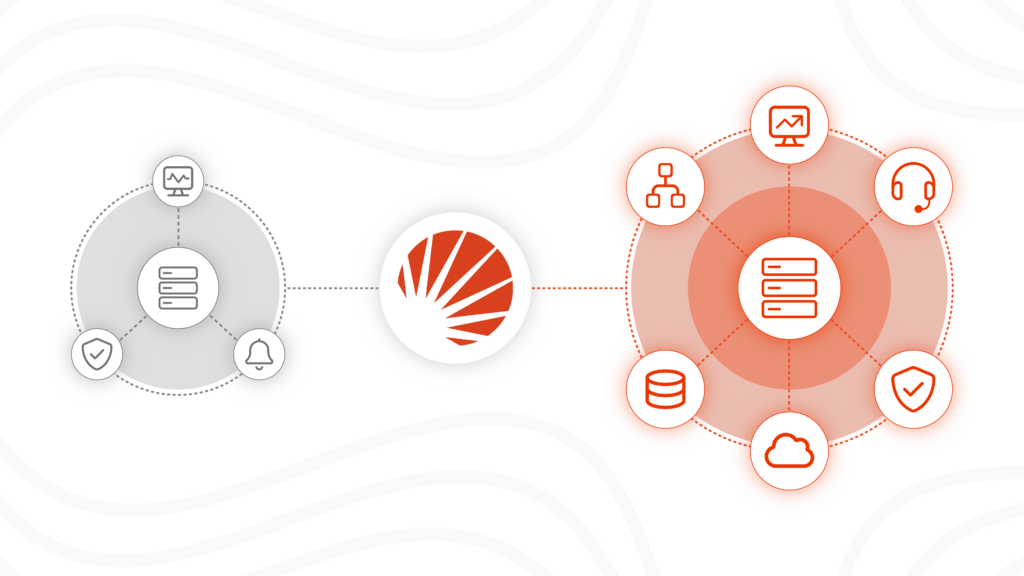
Managed Search owns the infrastructure work behind production search, so customers keep Solr, preserve schema control and retain relevance flexibility. SearchStax takes on the production operations behind the engine: deployment, monitoring, alerting, backups, patch support, on-demand scaling, recovery and operational coverage across AWS, Azure, Google Cloud and multicloud environments.
That matters because cloud doesn’t remove Solr operations. It adds region, network, capacity, security and recovery decisions. A managed service gives customers Solr control without turning internal teams into full-time Solr infrastructure operators.
Kelly Services and Howdens show the operational value. Kelly runs its Market Rate Index product on the cloud, without adding internal DevOps headcount. Howdens moved away from self-managed Solr to reduce upgrade friction and support trade and consumer search experiences. In both cases, the managed service moved infrastructure work off teams responsible for the application.
"DIY Solr search is financially irresponsible when production search carries business impact."
Why Enterprise AI Search Makes DIY Solr Riskier
Enterprise AI search raises the cost of failure because retrieval depends on fast, relevant and stable search infrastructure. When Solr supports RAG, hybrid search, vector search, AI crawler demand or large content updates, the workload needs more than a working cluster. It needs production operations built for scale, monitoring, recovery and uptime.
American Legal Publishing how production search demand changes when AI enters the workflow. Its legal search has to support citizens, municipalities and AI-driven crawlers, adding pressure on reliability and scale. Apache Solr has the retrieval depth for enterprise AI search workloads. For self-managed deployments, risk increases when production demand outpaces the team’s capacity to monitor, scale and recover the infrastructure behind it.
How Do You Choose a Managed Service for Enterprise Search?
A managed service for enterprise search should match what breaks if search fails. Standard production search needs uptime, recovery, scale and operational ownership. Business-critical search requires a higher bar: continuity, priority response, compliance coverage and a recovery model built around business impact.
When to choose a Managed Search Core plan: For production search that users depend on every day, Core plans provide managed operational coverage across CMS search, product documentation, customer portals, internal applications and standard search services. These workloads need reliable Solr operations without turning internal teams into infrastructure owners.
When to choose a Managed Search Enterprise plan: When search supports revenue paths, regulated content, AI retrieval, high-volume portals or customer-facing experiences, downtime escalates beyond IT. When those workloads slow or fail, the impact reaches the bottom line. Enterprise protects that level of business impact.
Recovery shows the difference. Analog Devices reduced recovery point objectives from 24 hours to less than 10 minutes. That is a business-continuity decision.
Enterprise-Level Search Needs Enterprise-Class Service
DIY Solr search is financially irresponsible when production search carries business impact. That burden shows up in delayed projects, uptime risk, patch cycles, cloud capacity decisions, incident response, recovery planning and compliance work.
When search supports a core business process, managed operational coverage becomes table stakes. If search failure hits revenue, compliance, AI retrieval or eCommerce, the workload requires Enterprise-class support.
Vue Cinemas and evo show what business-impact search looks like. When search supports ticket discovery or peak-season commerce, downtime reaches customers and revenue. The takeaway is simple: service level should follow business consequence.
Evaluate the service level by operational impact: who owns uptime, who owns recovery, who owns escalation and what the business loses when search fails.
Start by auditing the burden behind your current Solr deployment. How much time goes to patching, monitoring and recovery? Who owns downtime when search fails? What happens to customers, revenue or operations during an outage? How much roadmap work slows down because search infrastructure needs attention?
If those answers point to wasted time, rising risk or work your team should not own, DIY Solr already costs more than it looks. The next step is to quantify that burden and compare it against a managed service model. Use the report, Why Solr-as-a-Service Is Better Than DIY Solr Infrastructure, to compare the operational work behind DIY Solr against a managed service model.

Get Our Newsletter
The Stack is delivered bi-monthly with industry trends, insights, products and more

Trenton Baker
|
Principal Product Marketing Manager
Marketing leader who defines cloud and data strategy for AI/RAG use cases, data protection, and compliance. Connects technical decisions to business outcomes that enable customers to run production workloads and scale across cloud environments.