 Optimizely



In loving memory of your website navigation. … Here’s why you should be paying more attention to other methods of content discovery and delivery on your website instead of obsessing over your website nav.
For decades, website navigation has been the backbone of content discovery. Marketers and web designers have meticulously structured menus, submenus and category pages, assuming that visitors will follow a logical path to find what they need. Some marketers even refer to this as the “happy path.” But times have changed.
Today’s website visitors no longer rely on traditional navigation menus as their primary way to explore content. Instead, they gravitate toward onsite search, dynamic homepage elements and AI-driven recommendations to get answers faster. If marketers continue to focus only on optimizing website navigation, they risk ignoring how modern visitors actually engage with content—and losing potential conversions in the process.
That shift has become even more important as AI changes how people discover information before they ever reach a website. Visitors who do arrive may already have researched their options, formed specific questions and developed clearer intent. Your website needs to help those visitors act on that intent quickly.

So, are we really eulogizing website navigation? No. It’s still important for your navigation to be clean and organized in a functional manner. But it’s even more essential to explore why website navigation has become less effective over time, what’s replacing it and how marketers should adapt.
"Marketers who focus exclusively on optimizing their website’s navigation risk missing out on how visitors actually engage with content."
The Decline of Traditional Website Navigation
Until relatively recently, website navigation has been the de facto way of creating an organized path for website visitors to discover content and key pages. Dropdown menus, sidebars and mega menus have been staples of UX design, guiding visitors through an organization’s content.
However, data shows that visitors are engaging with these elements less and less. Some key factors driving this decline include:
- Mobile-first browsing – On smaller screens, traditional navigation menus shrink into hamburger menus or become buried, making them less accessible. Thrive’s 75+ Mobile Surfing Stats shows us that mobile devices accounted for 58% of global website browsing in 2023 (a number that continues to rise today).
- User impatience – Visitors want instant answers. Clicking through layers of categories feels inefficient compared to simply searching or selecting a recommended article. This is even more prevalent across younger generations; Gen Z in particular prefers to go directly to the search bar as their primary means of content discovery.
- More complex websites – As websites grow, navigation structures become bloated and harder to maintain, making them less effective for visitors who just want quick access to relevant content. For content-rich websites in industries like higher education, healthcare and government, the issue becomes extremely complex as key content is often distributed across multiple domains and microsites.
There’s another factor at play: visitors increasingly arrive with a destination in mind. They may have come from Google, an AI-generated answer, social media, an email campaign or another external source. By the time they reach your site, many aren’t looking for a tour of your navigation menu; they’re looking for something specific.
With these changes, website visitors are shifting toward faster, intent-driven content discovery methods that leave your website nav in the digital dust.
How Website Visitors Actually Find Content Today
Instead of following a rigid navigation structure, people are finding content through search, recommendations and intelligent discovery features. Let’s take a closer look at what’s replacing traditional navigation:
Onsite Website Search
Many visitors now head straight to the onsite search bar to find what they need. In fact, studies showthat users who engage with onsite search are more likely to convert than those who don’t. Why? Because search allows them to bypass navigation entirely and jump straight to exactly what they’re looking for.
We’ve become a search-first society in many ways. What’s the first thing you do when you need to find a piece of information? You type your search into Google. If you’re working on a project with the help of ChatGPT, you type your questions into its message bar and it returns what you need.
So when visitors land on your website, why should their first action be any different? Your onsite website search has to be optimized to match the standards of big search engines and AI tools.
There’s also value in the query itself. When someone searches your website, they’re telling you what they want in their own words. That makes onsite search one of the clearest signals of visitor intent available to marketing and digital experience teams. The search experience should help the visitor in the moment while also helping your team understand what audiences need, where they’re encountering friction and which content may be missing.
AI-Powered Recommendations
Many visitors now head straight to the onsite search bar to find what they need. In fact, studies show that users who engage with onsite search are more likely to convert than those who don’t. Why? Because search allows them to bypass navigation entirely and jump straight to exactly what they’re looking for.
We’ve become a search-first society in many ways. What’s the first thing you do when you need to find a piece of information? You type your search into Google. If you’re working on a project with the help of ChatGPT, you type your questions into its message bar and it returns what you need.
So when visitors land on your website, why should their first action be any different? Your onsite website search has to be optimized to match the standards of big search engines and AI tools.
Homepage Features and Dynamic Elements
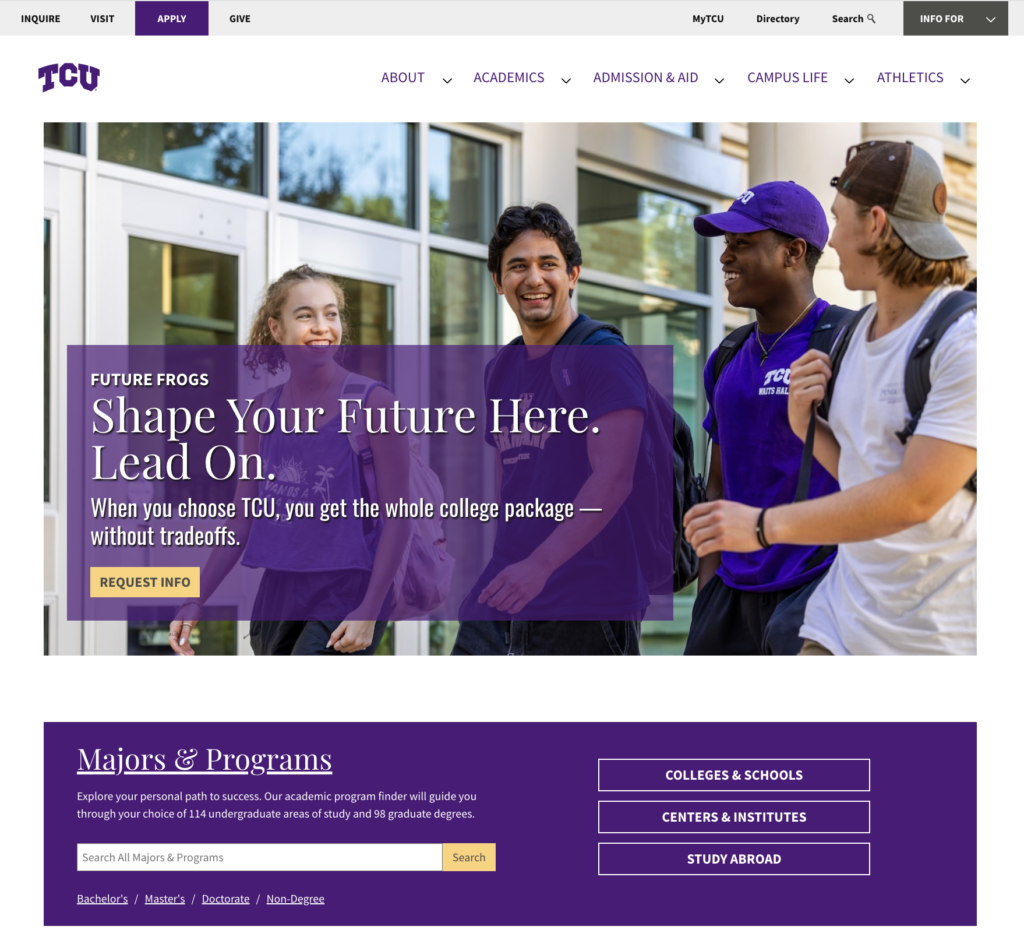
Rather than relying on a static navigation menu, many websites are featuring key content directly on their homepage. These elements include:
- Featured articles
- Dynamic carousels
- Personalized content modules
- Suggested next steps
Conversational Search and AI Answers
With the rise of voice search and chatbots, visitors are finding content through natural language interactions rather than by clicking through categories. Conversational AI tools can now answer questions, suggest content, and guide people without ever needing a navigation menu.
Generative AI has pushed this expectation even further. People are increasingly comfortable typing full questions and expecting a useful answer instead of figuring out which combination of keywords will lead them to the right page. That behavior is carrying over to website search.
There are even AI-powered tools to help your site search solution understand the deeper contextual meaning of people’s searches and ensure your results page surfaces the right content every time.
Modern search experiences can also pair traditional results with generative AI answers grounded in an organization’s own website content. That gives visitors another path to the information they need while preserving access to the authoritative source material behind the answer.
From Content Discovery to Answer Discovery
There’s another evolution happening that marketers need to account for: visitors increasingly expect websites to answer questions, not simply point them toward pages.
That expectation has been shaped by the AI tools people now use every day. Someone looking for an application deadline, healthcare service or government requirement may have little interest in figuring out which section of a website contains the information. They want to ask the question in their own words and get a useful response.
This changes what good content discovery looks like. Traditional search results still have an important role, particularly when visitors want to explore a topic or compare several resources. For more specific questions, a direct answer can create a much shorter path to the information someone needs.
Generative AI makes it possible to bring those answer experiences directly to your website. Smart Answers, for example, uses an organization’s indexed website content to generate answers to natural language questions while giving visitors access to the source content behind the response.
For marketers, the opportunity is to think beyond individual pages and navigation paths. Your content already contains answers to many of your audience’s questions. Modern discovery experiences can make those answers easier to access, whether a visitor searches, asks a question or explores recommended content.
The Problem with Relying Solely on Navigation
Marketers who focus exclusively on optimizing their website’s navigation risk missing out on how visitors actually engage with content. Here’s why traditional navigation no longer works:
- It assumes a linear user journey – Visitors don’t always follow a predictable path. Some arrive via search, others from a social media link and some from a recommendation engine. Navigation doesn’t accommodate these diverse entry points; you have to be prepared to accommodate a non-linear customer journey.
- It creates unnecessary friction – Complex navigation structures require multiple clicks. In contrast, onsite search and AI-driven recommendations deliver content instantly.
- It’s difficult to maintain – As websites evolve and new content is created, navigation structures become outdated, requiring constant updates and design/developer involvement. Meanwhile, AI-powered and search-centric discovery methods automatically adapt to visitor behavior.
There’s also a measurement problem. Navigation can tell you which paths people followed. Search can tell you what they were actively trying to find. Both signals matter, but the latter gives marketers a particularly useful window into audience intent.
How Marketers Can Build for Modern Content Discovery
So, what should marketers focus on instead of just optimizing navigation? Lean into some of the content discovery methods we shared above. Here are the three key strategies that are replacing traditional menus with advice on how to approach implementation:
1. Invest in Onsite Search Optimization
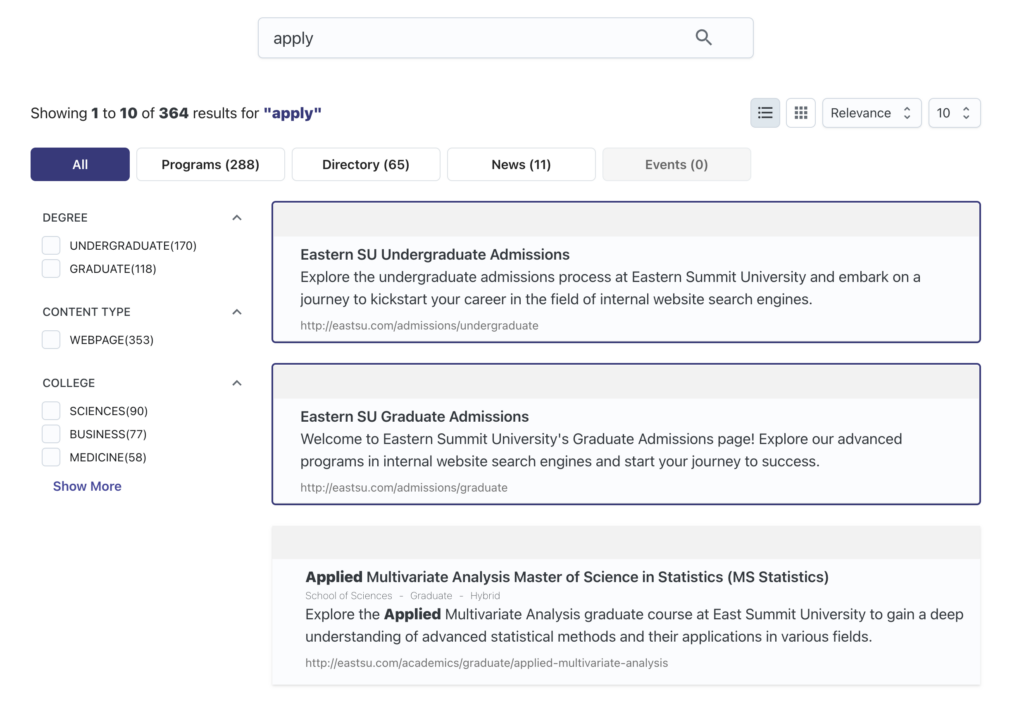
A well-optimized search function is no longer optional—it’s a necessity. Ways to improve onsite search include:
- Implementing AI-powered site search tools to better understand and deliver upon user queries.
- Using filters and facetsto refine search results and surface the most relevant content.
- Enhancing search relevance to deliver more accurate results based on visitor behavior data.
Tips for implementing:
Finding the right platform for your site search is the first step. Website experience owners often fail to recognize the power of onsite search and how it provides easily accessible first-party data that is invaluable for optimizing not only your search results, but your entire website experience.
Look for a platform that gives marketing and digital teams visibility into what visitors are searching for along with the ability to act on those insights. Search optimization moves faster when the people closest to the audience can adjust relevance, promote important content and respond to emerging needs without relying on IT for every change.
2. Leverage AI for Personalization
Instead of forcing visitors to browse manually, serve up the right content at the right time. AI-driven recommendation engines can dynamically suggest blog posts, case studies or products based on a visitor’s past behavior and interests.
Tips for implementing:
Barriers for AI implementation often include trust of AI accuracy. That’s why it’s important to test and gradually implement AI. You also have to ensure that the use of AI stays within privacy and regulatory standards for your industry.
Human oversight matters here. Practical AI should make it easier to understand intent, improve relevance and connect people with useful content while giving your team appropriate control over how those experiences are shaped.
3. Enhance Homepage and Landing Page Content Discovery
Make it easier for visitors to find what they need by prioritizing content discovery elements, such as:
- Featured content sections showcasing popular or trending posts.
- Dynamic carousels that adjust based on visitor engagement.
- Contextual CTAs guiding visitors to relevant and high converting pages.
Tips for implementing:
Most important here is to test, test, test. Heatmapping and session recording tools are some of the best ways to see how people are interacting with your content when they land on your site.
If you’re like the majority of organizations, your homepage is your highest visited page. Intentionality around what you feature above the fold and as people scroll is the difference between a high converting website and a stagnant site that misses out on converting high intent traffic.
Search data can strengthen those decisions too. The topics people repeatedly search for can help inform which content deserves greater prominence across homepages, landing pages and other high-traffic experiences.
Let Your Website Navigation Rest in Peace
The era of relying solely on website navigation is over. Visitors no longer want to dig through menus—they want instant, relevant content. The organizations that embrace this shift will create a more intuitive, frictionless experience—and ultimately, drive better engagement and conversions.
Again, your website navigation isn’t really dead per se; it just needs to be clean and available for those who do click around, while you focus on higher impact content discovery levers.
The bigger opportunity is to treat every discovery interaction as a signal. What visitors search for, which content they choose and where they struggle can tell you what your audience needs from your website.
As external discovery continues to evolve, that insight becomes more valuable. The visitors who make it to your site have intent. Your job is to make sure they can act on it.
Is your website optimized for modern content discovery? Take a fresh look at your visitor experience and start testing search-first and AI-driven approaches today.

John Abbasi
|
Senior Editorial & Content Manager
Content marketing manager focused on brand storytelling, building SEO/GEO engines and elevating customer voices with a constant mission of weaving editorial quality and the value of site search technology into every piece of content.