 Optimizely
System pressure reveals the truth about retrieval architecture once a prototype enters production. A simple Retrieval-Augmented Generation (RAG) pipeline retrieves data once and provides a response. Agentic AI does not stop there. It behaves like a research assistant that identifies gaps, runs additional queries and validates results before returning an answer. This shifts system load from intermittent spikes to continuous pressure. Developments become volatile when query volume expands and retrieval chains execute in parallel. Delays compound across chained calls and cause timeouts or broken responses.
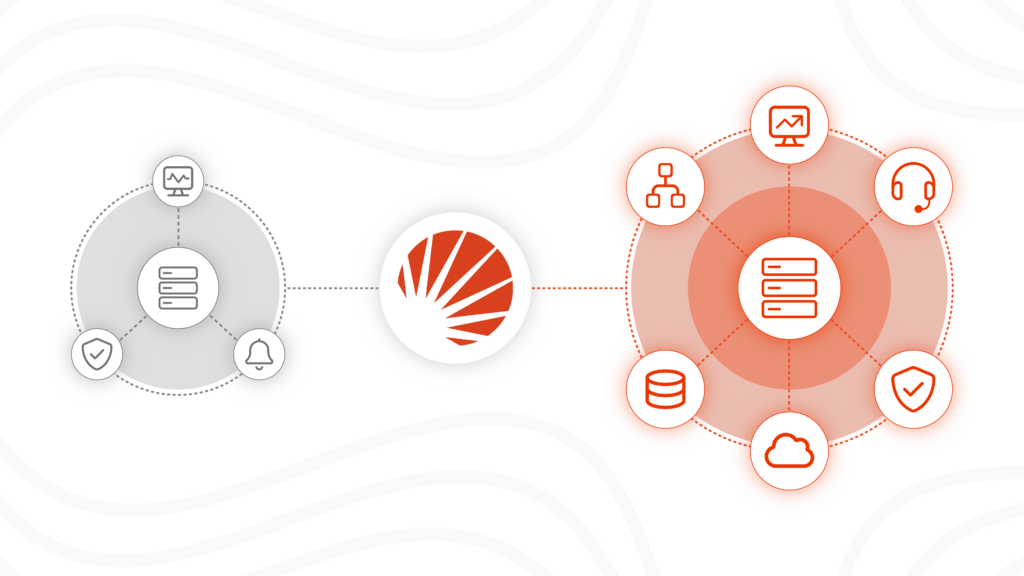
Infrastructure ownership determines reliability for Agentic AI and RAG. Both Apache Solr and OpenSearch support vector search, hybrid retrieval and semantic ranking. Production failures occur when the environment can’t sustain continuous retrieval pressure. Infrastructure-managed search places the responsibility for cluster design, scale policies and recovery on the customer. Managed Search removes this operational burden and delivers performance, scale, and recovery as defined service outcomes. This multi-cloud approach allows customers to focus on search capabilities rather than infrastructure mechanics.
Why AI Retrieval Breaks Traditional Search Systems
Traditional search systems operate on predictable patterns where peaks align with business hours. Index updates occur in controlled batches and capacity planning works within known bounds. AI retrieval breaks these patterns because one request triggers multiple calls across datasets. Each call involves vector similarity search, keyword matching and reranking in real time. Load no longer scales linearly with the number of users. It multiplies with every additional retrieval step the agent takes.
Agentic workflows amplify this effect when an agent loops through retrieval cycles until it satisfies a specific goal. This introduces unpredictable demand that traditional steady-state assumptions cannot support. Latency becomes a compounding factor because a single slow node delays the entire chain of reasoning. If nodes stall or degrade, the system fails to respond in time.
Reliability no longer depends on average performance but on worst-case behavior under sustained load. Infrastructure becomes the primary limit when clusters cannot absorb these bursts without performance degradation.
What Solr and OpenSearch Actually Solve and What They Do Not
Which is better for RAG, Solr or OpenSearch? Both engines meet the requirements for enterprise AI search, including vector search, hybrid queries and semantic ranking. The constraint is not the engine. It is how the system operates in production. Solr provides flexible schema control, mature indexing strategies and support for dense vector fields and approximate nearest neighbor search. OpenSearch offers similar capabilities and integrates into broader cloud-native data pipelines. Reliability and performance depend on the operational model, not the engine.
Engine parity means that operational ownership remains the only significant variable. Neither Solr nor OpenSearch solves the problem of cluster topology or scaling behavior. Customers must still define shard allocation, monitor system health and respond to failures. These responsibilities sit outside the engine code. Most teams misdiagnose performance issues as engine limitations when the actual struggle involves cluster instability or recovery gaps. The engine performs as designed while the infrastructure around it fails to sustain the workload.
"Fully managed services approach reliability through real-time monitoring and automatic capacity adjustments. The service applies updates and restores service from failures without a requirement for manual intervention."
Where Systems Fail In Production
Production systems fail when demand exceeds the planned capacity of the cluster. Nodes reach saturation, latency rises, and queries begin to queue until the system requires intervention. In an infrastructure-managed model, the customer owns the responsibility to fix these issues. Engineers must adjust cluster size, rebalance shards, or provision more nodes while performance continues to degrade. These actions take time and often occur too late to prevent a visible failure. This delay forces a degraded state that AI workloads cannot tolerate.
AI workloads amplify failure conditions because continuous retrieval chains do not tolerate degraded states. A partial failure in one node cascades across multiple retrieval steps. Instead, the failure appears as broken responses or timeouts in the final application output. These issues result from the operational ownership model rather than the search engine code. Reliability remains a product of the service model rather than the search syntax.
Infrastructure-managed Search vs. Fully Managed Search
Infrastructure-managed search provides access to provisioned clusters and supporting tools. The service handles underlying compute and storage, but the customer owns cluster design and operational decisions. Reliability depends on how well manual decisions match workload demand. Customers must define shard allocation, replication strategies and scale thresholds. They must monitor and respond to anomalies. The system provides the tools, but the user must provide the outcome.
Managed Search shifts the responsibility for infrastructure behavior to the service. The service handles scale decisions, applies security patches and maintains cluster health. The customer interacts with search capabilities rather than infrastructure mechanics. In an infrastructure-managed model, reliability emerges from configuration. In a fully managed service, reliability is a delivered outcome of the service design.
When demand increases, an infrastructure-managed system depends on predefined scale rules. If those rules do not match real-world patterns, the system lags behind the demand. A fully managed service adjusts capacity based on observed behavior without a requirement for manual intervention. The search engine does not change, but the operational model does. This cloud automation allows the system to absorb the sudden spikes typical of agentic AI.
The distinction between these models explains why many AI projects struggle to reach production. Teams often choose an infrastructure-managed model to save costs but end up with high operational overhead. They spend time on maintenance instead of the core application logic. This overhead creates a hidden cost that slows down the entire development cycle.
What Determines Reliability In AI Retrieval Systems?
Reliability for AI retrieval requires consistent performance under sustained pressure. A system must maintain low latency across chained calls and recover without interruption. Infrastructure-managed environments force customers to anticipate load patterns and provision capacity for the worst case. If demand exceeds these expectations, the system enters a degraded state until an engineer makes manual adjustments. This approach introduces risk because agentic retrieval generates bursts that exceed planned capacity.
Fully managed services approach reliability through real-time monitoring and automatic capacity adjustments. The service applies updates and restores service from failures without a requirement for manual intervention. Systems that remove infrastructure ownership report measurable outcomes. 95% of customers experience no downtime over a twelve-month period, and scaling operations complete up to 16 times faster than manual cluster adjustments.
Reliability depends on the service model, not configuration or engine choice.
Scaling Under Unpredictable Demand
Scale determines whether a system can sustain AI workload pressure. Traditional scaling reacts after thresholds are exceeded, but agentic workloads exceed those limits before scaling triggers, which causes performance degradation. Infrastructure-managed systems require constant tuning to balance cost and performance, where overprovisioning increases expense and underprovisioning increases risk.
Managed Search removes this burden from the engineering team. The service scales capacity based on real-time demand and does not require the customer to set manual thresholds. It maintains high performance without the need to require load prediction of future load patterns. Scale becomes an outcome that the service delivers rather than a task for the developer. This allows the system to absorb the sudden spikes typical of agentic AI without a lag in response time.
Recovery Defines Production Readiness
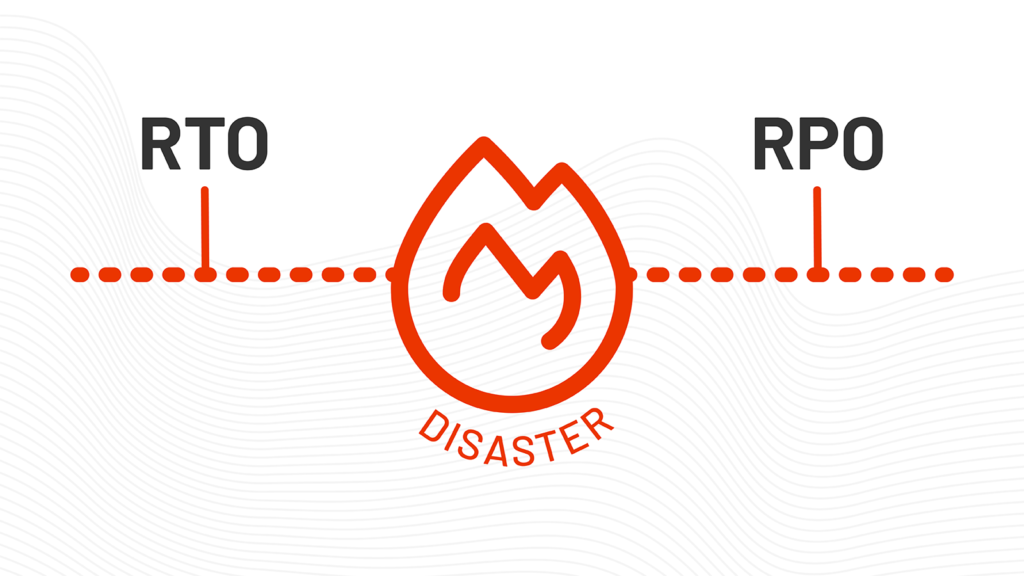
Uptime alone does not prove that a system is resilient enough for production. Recovery Time Objectives (RTO) and Recovery Point Objectives (RPO) allow builders to assess risk and maintain business continuity. Infrastructure-managed systems often leave these definitions implicit and rely on manual configuration. Without clear targets, customers cannot predict the duration of a service disruption or the extent of data loss.
Managed Search defines these recovery targets as a core part of the service. The service implements automated disaster recovery mechanisms to meet RTO and RPO targets consistently. Failures become events with known outcomes rather than unpredictable emergencies. The ability to recover without a manual restart or shard rebalance maintains the function of the AI agent. Automated recovery removes the risk that a minor node failure halts the entire reasoning chain.
Engineering Time is the Hidden Constraint
Engineering time is the most constrained resource in the development of AI applications. Teams must allocate effort across infrastructure, model development, and application logic. Every hour spent on cluster maintenance reduces the time available for core innovation. Infrastructure-managed search consumes this time as engineers monitor clusters, adjust scaling policies and troubleshoot failures. These tasks maintain stability but do not improve retrieval quality. AI workloads increase this burden because the continuous pressure requires constant attention from the team.
Fully managed search removes this operational burden and allows engineers to focus on application logic. Customers invest their time in relevance tuning, model integration, and improvements to the user experience instead of cluster health. This shift accelerates the delivery of AI features and allows systems to evolve based on user needs. Innovation accelerates when teams are not responding to 2 AM alerts. The service handles the infrastructure so the builders can focus on the data.
This shift accelerates delivery and allows systems to evolve based on user needs.
Use the Engine You Trust, Fix the Operating Model
Solr and OpenSearch can both support AI retrieval. The issue is whether the system can handle sustained query pressure once agents run chained retrieval calls. Since infrastructure ownership determines reliability for AI retrieval systems, the big decision becomes if the cluster can’t scale, recover or stay healthy under chained agentic AI retrieval calls, the engine choice won’t save the workflow.
This is why the operating model matters, self-managed search leaves your team responsible for cluster health, scaling, patching and recovery. That burden grows as agentic AI workloads move from prototype to production and engineering. time shifts to maintenance instead of improving retrieval quality.
Managed Search removes this operational burden and delivers scale and recovery as defined outcomes. Builders keep full control of Solr without managing the infrastructure, which allows teams to focus on relevance, product innovation, and doing more with your data.
Frequently Asked Questions
Does Agentic RAG require a specific engine?
No. Both Solr and OpenSearch support vector search, hybrid retrieval, and the complex workflows required for Agentic RAG. Neither engine restricts what a customer can build.
How does Agentic AI change infrastructure load?
Agentic AI issues multiple retrieval steps, evaluates results, and refines queries in a sequence, unlike standard RAG retrieval. This behavior creates continuous pressure on the retrieval layer. Load multiplies with each step rather than scaling linearly with user count.
Why do traditional scaling models fail for agents?
Traditional scaling relies on predefined thresholds and reacts only after a limit is reached . Agentic workflows generate bursts that exceed these thresholds before the scale process can trigger. Performance degrades before the system reacts. Fully managed search removes this risk through real-time capacity adjustments.
What defines production-ready AI retrieval?
Recovery speed is the primary metric for production readiness. A system must maintain clear Recovery Time Objectives (RTO) and Recovery Point Objectives (RPO) . Infrastructure-managed systems often rely on manual intervention for recovery. Fully managed search implements automated mechanisms to meet these targets consistently.
How does a managed service improve productivity?
Infrastructure-managed search requires engineers to monitor clusters, adjust scaling, and apply patches. These tasks maintain stability but do not improve retrieval quality. Fully managed search handles these operational burdens. This allows the team to focus on relevance tuning and model integration to do more with your data.

Get Our Newsletter
The Stack is delivered bi-monthly with industry trends, insights, products and more

Trenton Baker
|
Principal Product Marketing Manager
Marketing leader who defines cloud and data strategy for AI/RAG use cases, data protection, and compliance. Connects technical decisions to business outcomes that enable customers to run production workloads and scale across cloud environments.