 Optimizely




Three out of four patients use a hospital or health system website during their care decision process. Not after they’ve chosen a provider. Not to confirm an appointment they’ve already scheduled. During the decision itself, before any clinical interaction has taken place.
That single finding from the 2026 SearchStax and MDRG national study of 1,000 U.S. adults should reframe how every health system thinks about its website. Not as a channel. Not as a communications function. As the first real interaction a patient has with your organization and increasingly the one that determines whether a relationship starts at all. Decisions are happening before appointments. Most health systems aren’t designed for that reality.
From Awareness to Action — The Website Owns the Journey
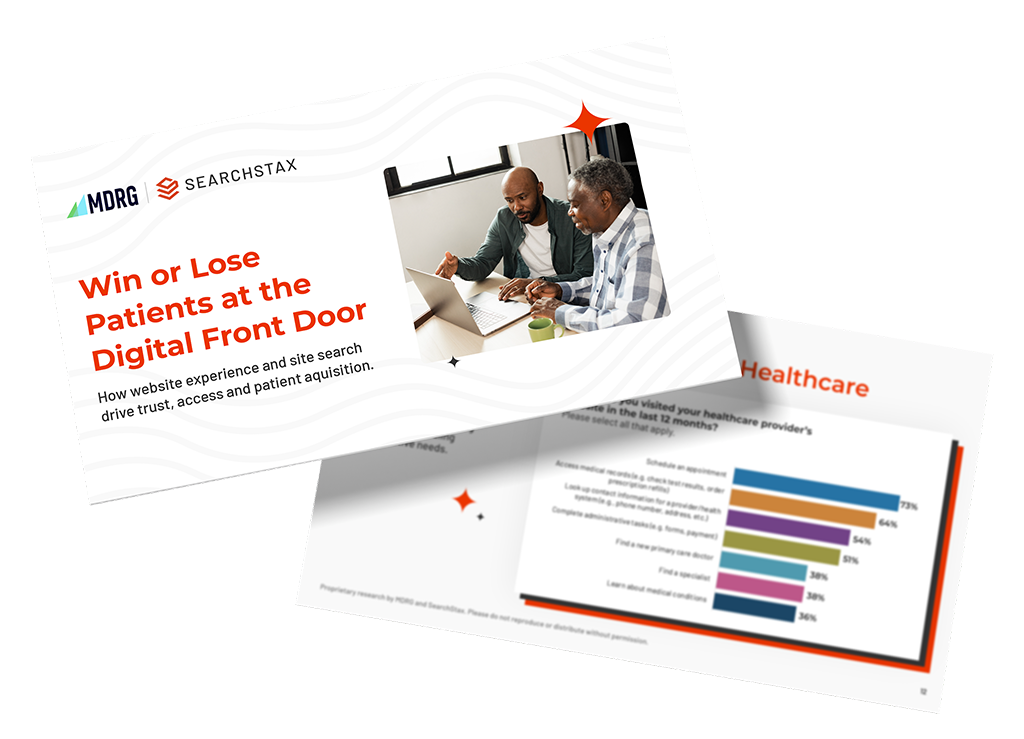
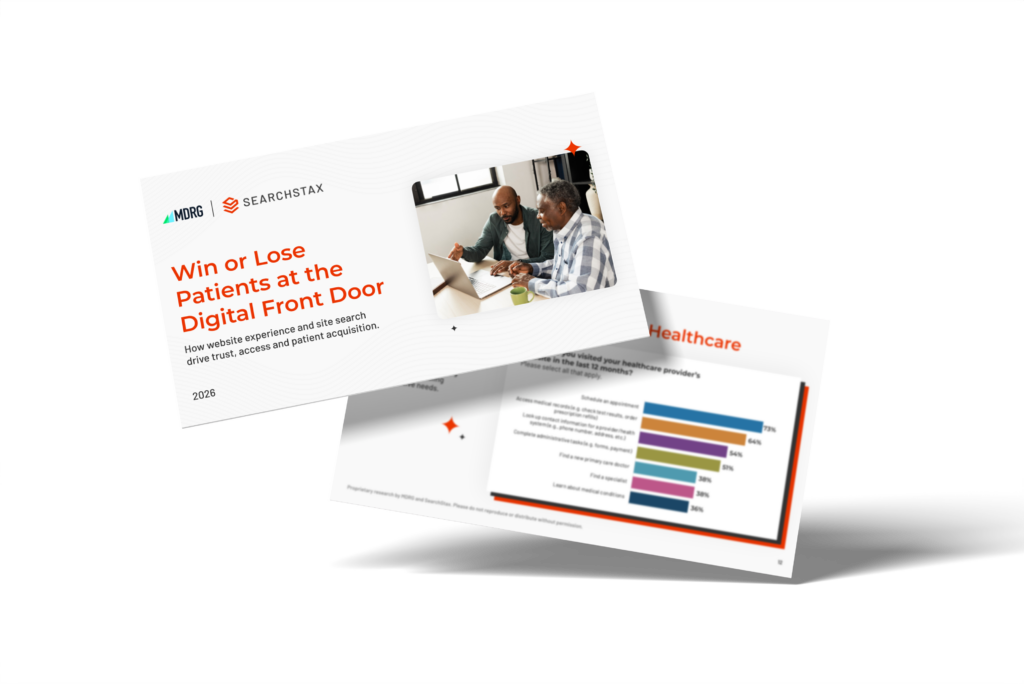
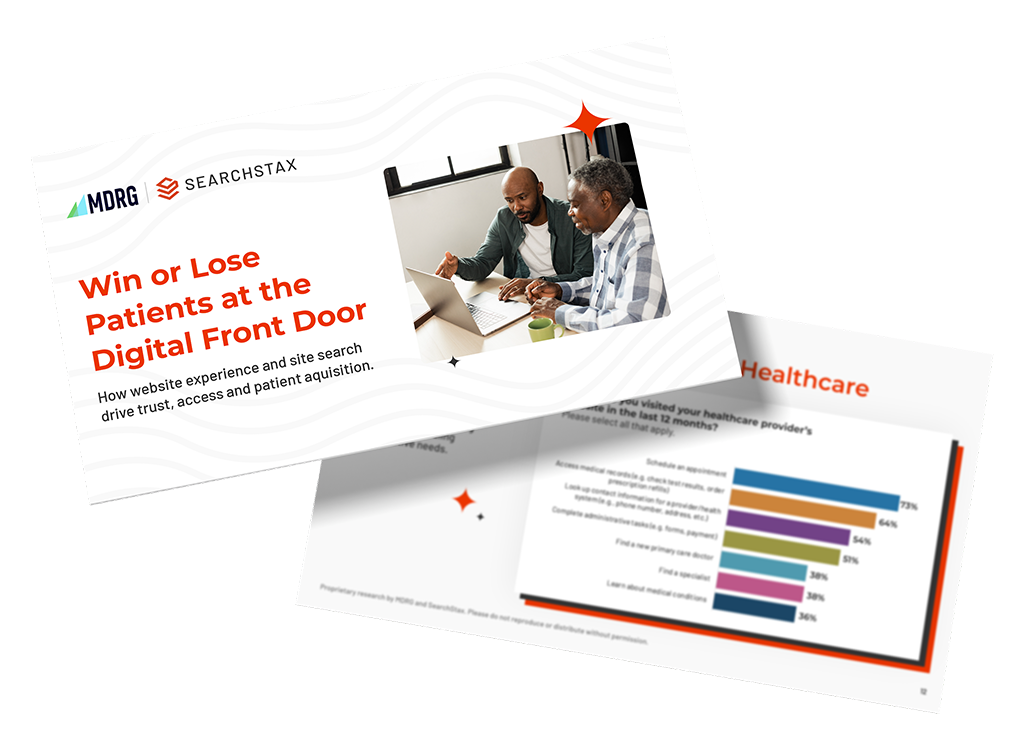
Patients aren’t visiting health system websites to read about organizational values or browse service line descriptions. They’re trying to get somewhere specific. The research is clear on what they’re actually doing when they arrive: 73% are trying to schedule an appointment, 64% are accessing medical records, 54% are looking up provider contact information and 38% are actively trying to find a new primary care doctor or specialist.
Every one of those behaviors represents intent. A patient looking for a cardiologist who takes their insurance isn’t exploring options in a leisurely way. Someone trying to find a same-week orthopedic appointment has already decided to seek care. These are people with a specific end goal at the heart of their actions, and your website either helps them do it or fails and sends them elsewhere for the right care.
The brochure site mentality never served patients particularly well, but it used to be survivable. That window is closed. Organizations still operating their websites as content repositories rather than action-oriented patient pathways are losing volume to competitors who made this shift already. The gap between those two operating models is widening, not shrinking.
"Organizations still operating their websites as content repositories rather than action-oriented patient pathways are losing volume to competitors who made this shift already. The gap between those two operating models is widening, not shrinking."
Trust Starts Before the First Visit
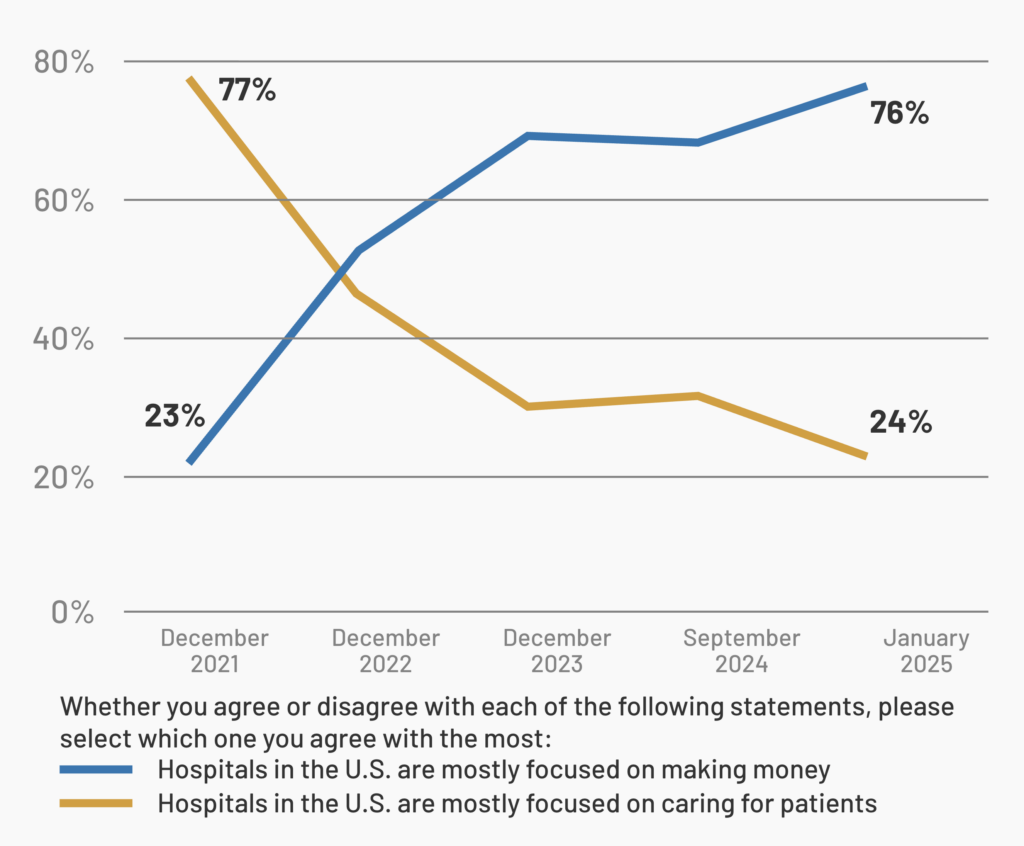
The trust environment surrounding healthcare makes the website’s role even more consequential than the access argument alone. By early 2025, only 24% of Americans believed hospitals prioritize patient care over profits. Patients are arriving on health system websites already skeptical, and the digital experience either confirms or counters that skepticism before they even experience a single clinical interaction.
The qualitative interviews in the MDRG study are worth sitting with. One woman, 43, described visiting an outdated healthcare website and making an immediate decision not to pursue care there. Her framing was direct: not even beginning the relationship, no trust at all. That judgment happened in seconds, on a homepage, before she read a single word about clinical quality or outcomes.
This is the dynamic most health system leaders underestimate. Patients use the digital experience as a proxy for how the organization operates overall. A modern, intuitive website signals a capable system. A clunky, confusing one signals the opposite. The clinical team may be exceptional, but none of that matters if the website loses the patient before the relationship starts.
Why Navigation Alone Is No Longer Enough
A large health system might carry hundreds of providers across dozens of specialties, multiple campuses and a service line structure that made sense inside an internal planning process. Navigation reflects how the organization is organized. It has almost nothing to do with how a patient thinks about their health.
Patients think in symptoms and situations. They type “knee pain” or “heart doctor near me” or “do I need a referral for a dermatologist?” The concept of a service line isn’t something most patients have ever encountered. When they can’t find what they need through menus and page hierarchy, they turn to site search, and for most health systems that’s where the experience starts to break down.
Search is the bridge between patient intent and the right pathway to care. Introducing it here isn’t an accident. The problems with how most health systems have built and maintained site search are significant, and the patient behavior consequences are measurable. That’s a longer conversation, but it starts with acknowledging that navigation alone was never going to be sufficient for the complexity patients are trying to navigate.
The Competitive Reality: Patients Compare You Instantly
A frustrated patient doesn’t call your main line to ask for help navigating the website. When the experience feels difficult, a meaningful share of patients simply opens a new tab. The competing health system, the independent specialty group, the telehealth platform that books appointments in under five minutes, all of it is one click away.
Health systems have historically operated as though patient loyalty was stickier than it actually is. The research challenges that assumption directly. One study participant, a 43-year-old woman, described it plainly: the better the website, the better maintained the care. She called it a package deal. Patients are making that connection whether health systems intend it or not, and competitors who’ve built better digital experiences are benefiting from it.
The website is no longer a requirement to check off. It’s a differentiator in a market where patients have real options and limited patience for friction.
What This Means for Digital Experience Leaders
The framing has to change first because framing determines budget. A website positioned internally as a communication expense will always be under-resourced relative to what it actually drives. The accurate description is acquisition engine, and presenting it that way to finance and strategy leadership changes the investment conversation.
From there, priorities need to follow patient behavior rather than internal org charts. High-intent pathways deserve more attention and more resources than brand content. Provider discovery, symptom-to-service matching, insurance transparency and online scheduling are where patients are trying to act. Those experiences need to be fast, accurate and designed around how patients describe their own health concerns, not how clinical documentation or marketing campaigns have historically framed them.
The 75% who start their care journey on your website are already there. What happens next is a choice.
Want to See How Digital Experience is Reshaping Patient Acquisition?
Download the full 2026 “Win or Lose Patients at the Digital Front Door” report from SearchStax and MDRG.
Get Our Newsletter
The Stack is delivered bi-monthly with industry trends, insights, products and more

Chris Pace
|
VP, Digital Experience Strategy
Chris Pace is VP, Digital Experience Strategy at SearchStax, where he helps enterprises modernize digital access through smarter site search and self-service. He brings 15+ years of marketing leadership focused on connecting people to valuable digital experiences.